

Get Expert TV Repair Services To Know What Is The Difference Between LED & LCD TV
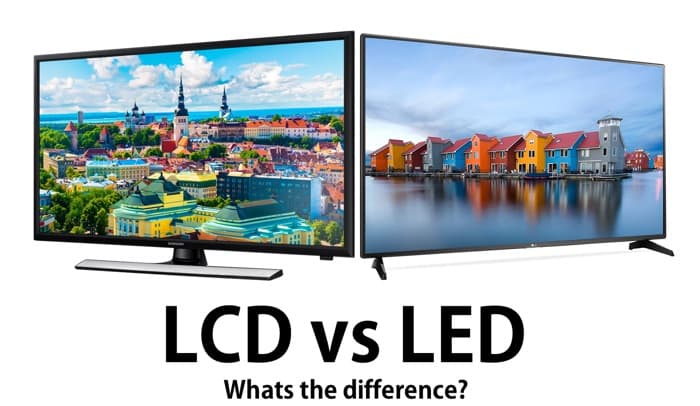
Are you wondering what is the difference between LED & LCD TV? Keep reading this article and know certain aspects of TV Repair Services.
LCD (Liquid Crystal Display) has two layers of polarized glass for liquid crystals to block and pass the light rays. Whereas, LED stands for ‘Light Emitting Diodes.’ LED TVs are considered to be a subset of LCD TVs. Both LCD and LED are built on liquid crystal technology.
Some people prefer to afford LCD and others wish to use LED. Despite the use of advanced technology both LED and LCD televisions are not beyond technical glitches.
Thus, you need TV repair services to fix these problems with your LCD and LED. If you approach our service, then you won’t require separate services for your LCD and LED. It will be highly beneficial for those who have LCD as well as LED in their house.
What is the Difference Between LED & LCD TV?
It’s better to have a clear concept before looking for TV repair services for your queries about LED and LCD. You might be wondering what can be the difference when both LCD and LED use the same technology.
So, let’s dive into the differentiating section revolving these two sets of televisions.
Use of Lights
Both LCD and LED TVs are equipped with backlight but fluorescent lights are light emitting diodes in a LED. These light emitting diodes rest around the edges of the LED. On the other hand, fluorescent lights always remain behind the screen on LCDs.
Thickness and Screen Size
LED TVs are thinner than LCD due to the backlighting technique they use. LCD TVs comes with a thickness of 1 inch that is the maximum thickness in case of LED TVs. The screens in LCD TVs range from 13 to 57 inches. Whereas, the screen size in LED TVs can range up to 90 inches as well.
Picture Quality
LED TVs run with greater efficiency and offer clearer pictures as well. LED TVs provide realistic and sharper colors since they work with a color wheel or distinct-colored lights like red, green, and blue.
Moreover, LED TVs are capable of dimming light emitting modes in order to display bright pictures. It actually blocks excess light from passing through the light panel. Though this feature isn’t available on edge-lit LED TVs, they can display truer white than fluorescent LED TVs.
To be precise, LED TV provides a better display and contrast than older LCD TVs. But you can get a clearer picture from TV repair services.
Display
An LED display is not actually the display for an LED TV. To be technically correct, LED-backlit LCD television should have the name for the display of a LED TV. Pictures in LED suffers since the viewing angle in an LCD TV can be up to 165 degrees.
But, the brightness and color on the screen of LED TVs depend upon the angle from which you are viewing the display.
Mechanism
In LCD TVs a layer of liquid crystals covers the backlight for controlling the exposure of light. These liquid crystals serve as light emitting diodes for the models of LED TVs.
Power Consumption
LCD TVs require less power to than Plasma but more than OLED TV sets. LED TVs consume 70% lesser power than LCD TVs that is a great difference for television users. Furthermore, LCD TVs offer lesser heat dissipation when compared with a traditional LCD TV.
Life Span
Burn-in is not an issue for LCD TVs but can rarely occur on a LED TV. LCD TVs usually offer a life span of 5000 to 100000 hours. In contrast, LED TVs can be in proper working condition for around 100000 hours.
To Wrap up
This article has clearly shown the distinctions between LED and LCD TVs. If you are looking for TV repair services for any of your LED or LCD TV, then get in touch with us. We are quite fast in removing the confusions of our clients.
 Social Media 2019